Introduction
Custom GPT adoption has accelerated across UK SMEs, startups, and growth firms because teams want practical automation without building AI systems from scratch. If you are wondering how to create a custom GPT with ChatGPT, the opportunity is simple: package your best processes, trusted knowledge, and brand voice into an AI assistant your team can actually use. In 2026, businesses are building custom GPTs for internal support, customer responses, content workflows, and operational consistency. This guide explains exactly how to build one, test it, improve it, and deploy it responsibly so the result is useful and secure.
What Is a Custom GPT in ChatGPT?
A Custom GPT is a configured version of ChatGPT that follows your instructions, uses your uploaded knowledge, and performs specific tasks for your business context.
How Custom GPTs Work
Definition snippet: A Custom GPT is an OpenAI-powered assistant created in ChatGPT using GPT Builder, where you define behaviour, upload a knowledge base, choose capabilities, and set guardrails for repeatable outcomes.
In practical terms, you provide:
- a role and scope (for example, sales enablement assistant)
- custom GPT instructions (what to do and what not to do)
- reference files (policies, product sheets, SOPs)
- style guidance (tone, structure, formatting)
The assistant then applies those constraints during conversations, which makes responses more consistent than generic prompting.
How They Differ from Standard ChatGPT
Standard ChatGPT is flexible but general-purpose. A custom GPT ChatGPT setup is purpose-built. Instead of rewriting prompts every time, your team gets repeatable behaviour, defined boundaries, and clearer outputs.
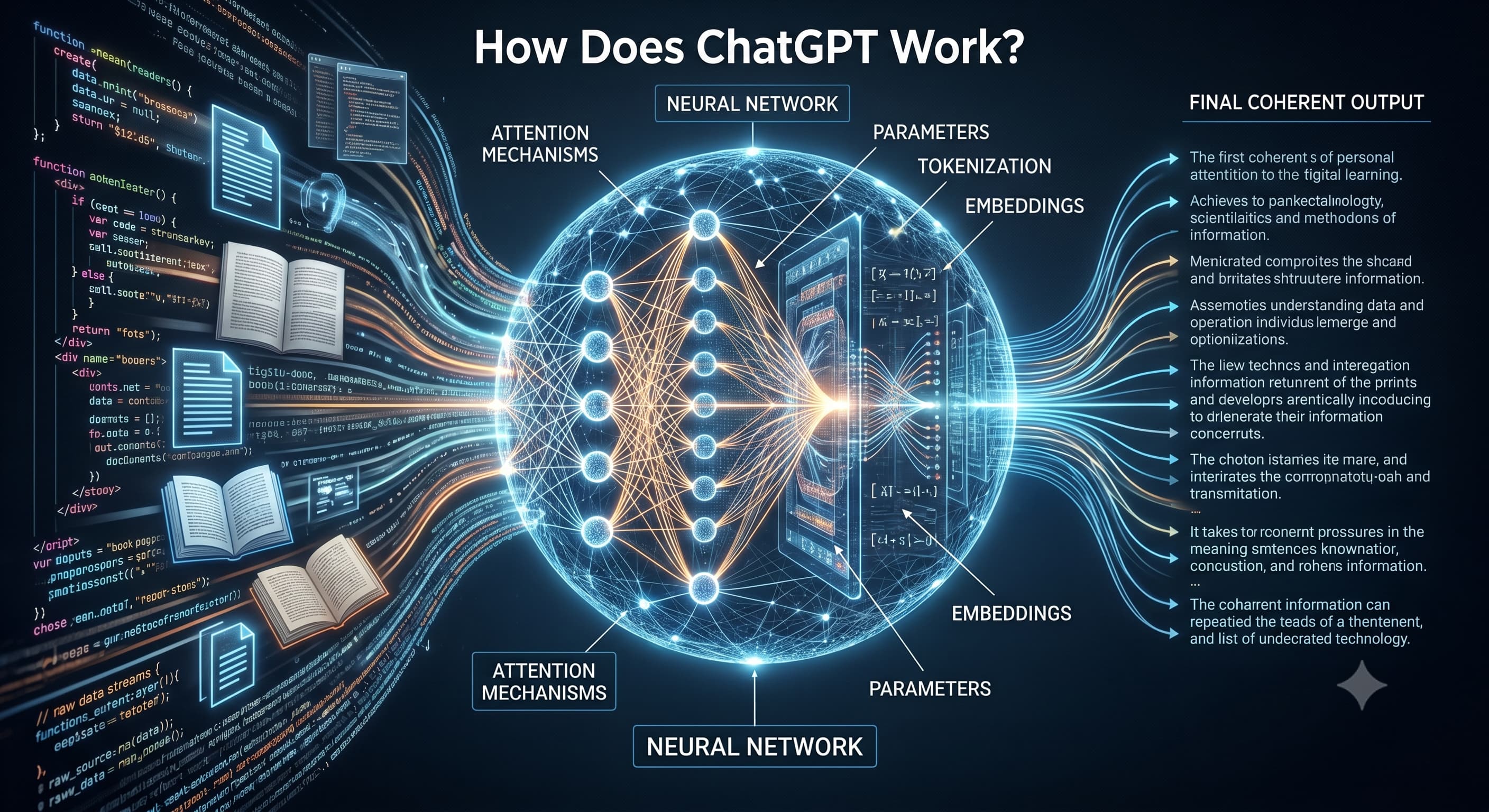
If you need a refresher on foundation concepts, review how ChatGPT works.
Why Businesses Are Creating Custom GPTs
UK organisations are moving from ad-hoc AI use to operational systems. A custom GPT for business helps teams codify best practice, reduce repetitive queries, and improve response quality.
Internal Knowledge Assistants
Operations teams can create a GPT in ChatGPT for policy lookup, onboarding, process clarification, and internal Q&A. This reduces interruptions and keeps team knowledge accessible.
Customer Support Automation
Support teams use a ChatGPT custom chatbot style setup to draft consistent replies, escalate correctly, and maintain quality standards. It improves first-response speed while preserving human oversight.
Marketing and Content Workflows
Marketing teams use custom GPT examples for campaign briefs, metadata drafts, and message consistency. This works especially well alongside ChatGPT for business content creation and stronger AI content optimisation.
Team Productivity
A well-scoped AI assistant for business removes low-value repetition so specialists can focus on judgement-led work. This is one reason London digital transformation programmes increasingly include workflow-level AI assistants.
How to Create a Custom GPT with ChatGPT
If your goal is to learn how to create a custom GPT with ChatGPT, follow this practical sequence. It is designed for UK business teams that need useful results quickly without sacrificing governance.
Accessing GPT Builder
Open ChatGPT, navigate to GPT Builder, and choose to create your own GPT. The ChatGPT GPT creator interface allows natural-language setup and structured configuration.
Defining Your GPT's Purpose
Set one clear purpose first. A strong purpose statement includes:
- target users
- job to be done
- allowed tasks
- disallowed tasks
- success criteria
Example: “Help account managers produce compliant proposal drafts using approved pricing and service policies.”
Creating Custom Instructions
Your custom GPT instructions should include role, context, constraints, formatting rules, fallback behaviour, and escalation triggers. Instruction quality is the biggest predictor of response quality.
Uploading Knowledge Files
Your custom GPT knowledge base should prioritise accuracy over volume. Upload current SOPs, policy docs, product/service references, and terminology guides. Remove duplicate or outdated files to reduce conflicting responses.
Configuring Capabilities
Select capabilities based on task requirements. Not every GPT needs every option. Keep scope tight to reduce noise and risk.
Testing and Refining Responses
Run realistic test prompts from actual business scenarios. Score outputs for accuracy, usefulness, tone, policy alignment, and escalation quality.
Numbered setup process snippet:
- Choose one business use case with measurable value.
- Draft concise role and boundary instructions.
- Upload high-quality, current source documents.
- Add response format rules (length, tone, structure).
- Test with 20 real prompts from different teams.
- Document failure patterns and instruction gaps.
- Refine instructions and knowledge files.
- Re-test and approve before wider rollout.
- Train users on expected usage and limits.
- Review monthly for drift, updates, and governance.
For teams designing implementation pathways, this complements practical work on building solutions with ChatGPT.
Best Practices for Building a High-Performing Custom GPT
Instruction Design
When you create custom GPT configurations, keep instructions explicit, layered, and testable. Use “must” and “must not” language. Add examples of ideal answers and unacceptable answers.
Knowledge Base Structure
A strong custom GPT setup guide always includes document hygiene:
- one source of truth per topic
- version dates in file names
- archived superseded documents
- clear ownership for updates
Brand Voice Consistency
Define tone, vocabulary, reading level, and formatting style. This is essential for client-facing use cases and multi-team consistency.
Accuracy and Reliability
Require the GPT to acknowledge uncertainty, request missing context, and avoid fabricated claims. Reliability matters more than speed in regulated or high-stakes sectors.
Checklist snippet: Custom GPT quality controls
- Clear scope and forbidden actions documented
- Current knowledge base with ownership assigned
- Prompt test suite covering edge cases
- Human escalation criteria defined
- Security and privacy review completed
- Performance review cadence agreed
Custom GPT Examples for UK Businesses
SEO Agency GPT
An SEO agency can build an OpenAI custom GPT that drafts content briefs, entity maps, and internal QA prompts aligned to Generative Engine Optimisation and modern AI search optimisation strategies.
Customer Support GPT
Support teams can create your own GPT assistant for policy-grounded reply drafting, ticket triage guidance, and response formatting based on brand standards.
Sales Assistant GPT
Sales teams can deploy a custom GPT builder workflow that handles qualification templates, proposal structures, objection handling drafts, and discovery prep.
HR Assistant GPT
HR teams can use ChatGPT automation tools for onboarding FAQs, policy explanation drafts, and internal procedural guidance.
Internal Operations GPT
Operations teams can centralise SOP interpretation and compliance reminders while maintaining human approval checkpoints.
Common Mistakes When Creating Custom GPTs
Poor Instructions
Most failures begin with vague instructions. If your prompt logic is ambiguous, your outputs will be inconsistent.
Weak Knowledge Sources
Outdated or conflicting documents create low trust. Knowledge quality matters more than prompt length.
Lack of Testing
Skipping structured testing leads to avoidable errors in live usage. Real prompts from real users are essential.
Unrealistic Expectations
A custom GPT is an assistant, not autonomous leadership. It accelerates workflows; it does not replace strategic judgement.
Custom GPT vs AI Agent
A custom GPT is usually best for guided, conversational support. AI agents are typically better for multi-step autonomous actions across tools.
Key Differences
| Feature | Custom GPT ChatGPT | AI Agent |
|---|---|---|
| Primary mode | Conversational assistance | Autonomous task execution |
| Setup complexity | Low to medium | Medium to high |
| Typical user | Teams needing guided outputs | Teams needing orchestration |
| Governance burden | Moderate | High |
| Best initial use | Knowledge and workflow support | Multi-system process automation |
When to Use Each
Use a custom GPT when you need predictable responses, branded communication, and controlled productivity gains. Use an AI agent when workflows require automated actions across systems, tool APIs, and decision checkpoints.
Agency Insight: What Most Businesses Get Wrong About Custom GPTs
From a UK agency implementation perspective, three issues appear repeatedly:
- Why most custom GPTs fail: teams optimise for launch speed, not operating quality. They deploy quickly without ownership, monitoring, or review cadences.
- Instruction quality is decisive: weak instructions create polite but useless outputs. Strong instructions create commercially useful responses.
- Knowledge quality beats prompt length: long prompts cannot rescue poor source files. Clean, current, structured knowledge drives dependable answers.
Industry Reality Check: Misconceptions, Limits and Myths
AI Misconceptions
Many teams still believe “more AI” automatically means better productivity. In reality, weak governance increases rework.
Custom GPT Limitations
Custom GPTs do not “know” everything about your company by default. Output quality depends on instructions, context, and source files.
Automation Myths
Automation does not remove human responsibility. It shifts judgement to quality control and exception handling.
Common Implementation Mistakes
Typical errors include poor file hygiene, no user training, and no escalation policy. Treat GPT deployment as an ongoing capability.
Security, Privacy and Governance Considerations
Sensitive Information
Do not upload confidential data unless policy and controls explicitly allow it. Define what content is restricted before rollout.
Access Controls
Assign role-based access so only appropriate users can edit instructions, manage files, or publish GPT updates.
Knowledge Base Management
Create a governance cycle for document refresh, source validation, and archive control. This protects answer quality and auditability.
Future of Custom GPTs for Business Automation
AI Assistants
Over the next 12 to 24 months, more UK businesses will create custom GPT systems for role-specific support rather than one general assistant for everyone.
Agentic Workflows
We will see increased blending of custom GPT front-ends with agentic back-end automations, especially in marketing, operations, and customer support.
AI-Driven Operations
The bigger shift is operational maturity: teams combining workflow design, governance, and AI search visibility. If you are planning long-term visibility strategy, track how AI search is changing SEO.
Frequently Asked Questions
What is a Custom GPT?
A Custom GPT is a configurable version of ChatGPT designed for a specific task, team, or business function. Instead of prompting from scratch each time, you define instructions, upload relevant knowledge, and set expected response behaviour. This makes outputs more consistent and practical for day-to-day operations. For UK businesses, it is often the most accessible way to move from AI experiments to repeatable workflow support.
Do you need coding skills to create custom GPT?
No, coding skills are not mandatory for most setups. GPT Builder is designed for non-technical users, especially for knowledge support, drafting, and structured Q&A use cases. However, technical support can help with governance, integrations, and scaling decisions. If your use case includes regulated workflows or complex system actions, involve technical and compliance stakeholders early to ensure alignment with internal policies and platform requirements.
Can businesses create a GPT in ChatGPT for internal teams?
Yes, and many already do. A custom GPT for business can support onboarding, policy lookup, proposal drafting, and internal process guidance. The key is to define scope and quality controls before rollout. Start with one department, document expected usage, and refine based on real prompts. This phased model usually delivers stronger adoption, better output quality, and clearer ROI measurement for stakeholders.
What files can be uploaded to a custom GPT knowledge base?
Most teams upload policy documents, SOPs, product/service guides, pricing frameworks, FAQs, and internal playbooks. The exact formats may evolve with platform updates, so focus on document quality first: current versions, clear ownership, and no contradictions. Good file curation is more important than file volume. A smaller, reliable knowledge base consistently outperforms a large but messy one in both accuracy and user trust.
Are Custom GPTs secure for UK organisations?
They can be secure when implemented with proper governance. Security depends on access controls, data handling policy, user permissions, and clear rules on restricted information. Treat security as a process, not a feature toggle. Run periodic reviews, train users on acceptable usage, and enforce escalation when uncertainty appears. Align practices with UK data protection standards. Governance quality, not tool novelty, determines practical security outcomes.
What is the difference between a custom GPT and an AI agent?
A custom GPT is primarily a conversational assistant that generates guided outputs within defined instructions. An AI agent is usually designed for autonomous multi-step actions across tools and systems. Custom GPTs are often faster to deploy and easier to govern initially. Agents can unlock deeper automation but introduce higher complexity, monitoring needs, and risk controls. Most businesses benefit from starting with custom GPTs before progressing to agents.
Can a custom GPT use company documentation effectively?
Yes, provided documentation is current, well-structured, and directly relevant to the intended task. Uploading random or outdated files usually reduces answer quality rather than improving it. Effective implementations maintain one source of truth per topic, version control, and scheduled document reviews. When businesses treat knowledge management seriously, custom GPT responses become noticeably more accurate, consistent, and useful for day-to-day team operations.
How long does custom GPT setup take in practice?
A useful first version is often possible in a single working session, but production-ready quality takes longer. Most UK teams need one to three weeks to define scope, test prompts, refine instructions, and complete governance checks. The timeline depends on use-case complexity and document quality. Fast launch is easy; dependable performance requires structured iteration and ongoing refinement based on real user feedback.
Can a custom GPT be shared with a team?
Yes, team sharing is a core business use case. Before sharing, define who can use the GPT, who can edit configuration, and how updates are approved. Provide a short usage playbook so staff understand purpose, limits, and escalation paths. Shared GPTs deliver the best results when training and governance are introduced alongside deployment, ensuring consistent usage and reducing misunderstandings about capabilities.
What are the most common mistakes when businesses create custom GPT systems?
The biggest mistakes are vague instructions, weak knowledge sources, minimal testing, and unrealistic expectations about output quality. Many teams also skip ownership and monitoring, which causes quality drift after launch. To avoid this, assign a clear owner, maintain a test prompt library, and run monthly performance reviews. Strong operating discipline is what separates a dependable business tool from a neglected chatbot experiment.
Final Thoughts
Learning how to create a custom GPT with ChatGPT is now a practical advantage for UK businesses that want faster execution with better consistency. Start focused, define strong instructions, maintain a clean knowledge base, and enforce governance from day one. The organisations that win in 2026 will not be those with the most tools; they will be those with the clearest operating model for safe, useful AI.
Final Thoughts
Creating a custom GPT with ChatGPT is one of the most accessible ways for UK businesses to operationalise AI in 2026. Success depends less on technical complexity and more on clarity of purpose, quality of knowledge sources, and disciplined governance after launch.
If you want to explore where a custom GPT can improve your workflows, start with one high-friction process, test outcomes rigorously, and seek specialist guidance when implementation complexity increases.
Information Disclaimer:
This article is for educational and informational purposes only.
Outcomes vary by market, implementation quality, and ongoing performance management.
Please seek qualified professional advice for your specific business circumstances.