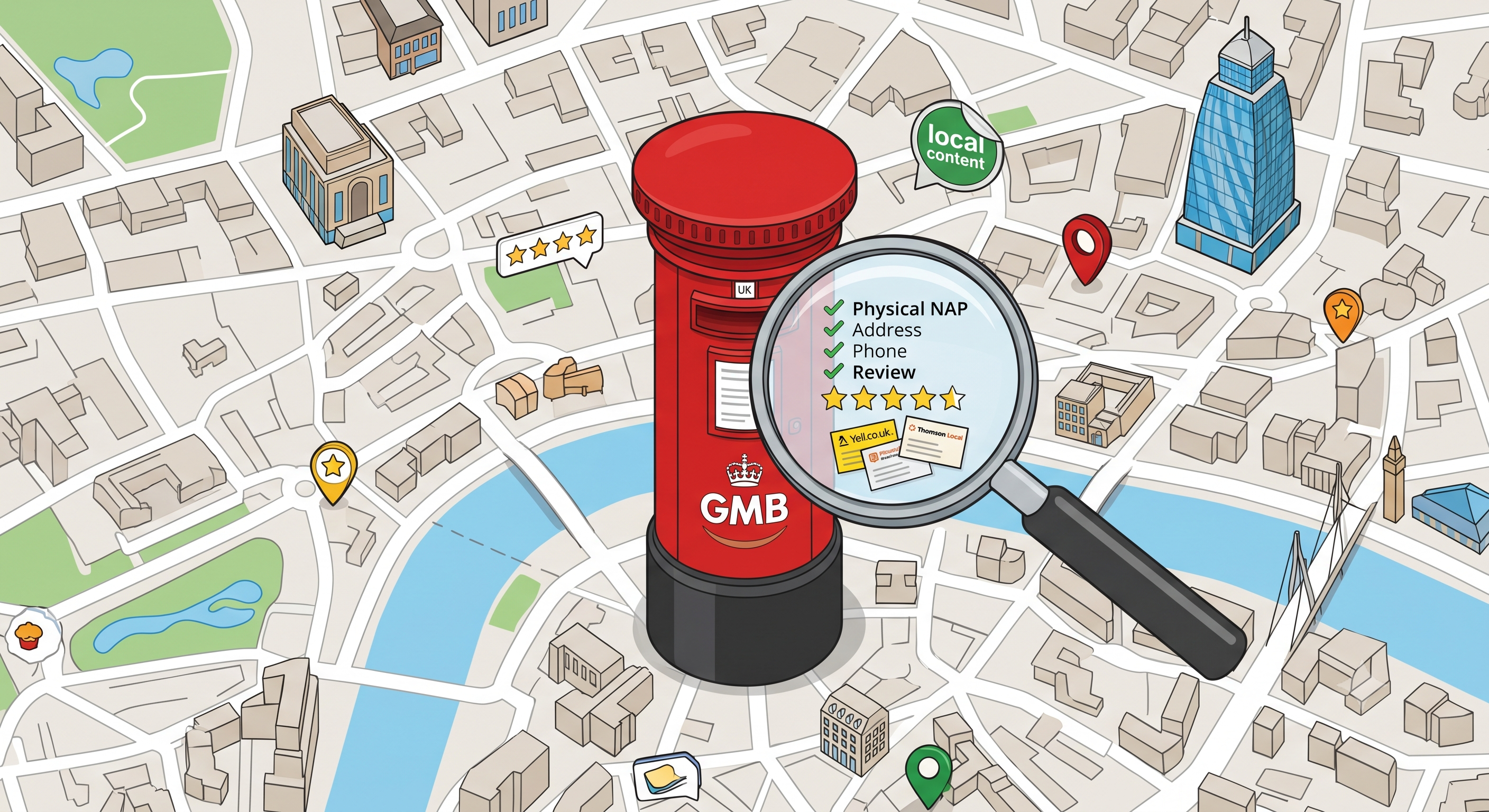
Introduction
Local SEO is the practice of optimising your online presence to attract customers from location-based searches. It helps businesses appear in Google Maps, local search results, and AI-powered answer engines when people search for products or services "near me" or in specific areas.
What Is Local SEO?
Local SEO (Search Engine Optimisation) is the strategic process of optimising your business's online presence to increase visibility in location-based search results. Unlike traditional SEO that targets broad, national keywords, local SEO focuses on capturing customers who are searching for products or services within specific geographic areas.
When someone searches for "plumber near me," "best restaurant in Manchester," or "solicitors Birmingham," search engines use complex algorithms to determine which local businesses to display. Local SEO ensures your business appears prominently in these results, connecting you with customers at the exact moment they need your services.
The local SEO landscape has evolved significantly in 2026, with AI-powered search experiences like Google AI Overviews, ChatGPT Search, and Perplexity now providing direct answers to local queries. This means businesses must optimise for both traditional search results and AI-generated responses to maintain comprehensive local visibility.
Why Is Local SEO Important for UK Businesses?
Local SEO has become indispensable for UK businesses due to fundamental changes in consumer search behaviour and the increasing dominance of mobile search. Here's why it matters more than ever:
High Commercial Intent
Local searches carry exceptional commercial intent. When someone searches for "accountant Nottingham" or "emergency dentist Leeds," they're not browsing—they're looking to engage a service provider immediately. This creates opportunities for businesses to connect with prospects at the optimal moment in their buying journey.
Mobile-First Consumer Behaviour
With over 85% of local searches now conducted on mobile devices, consumers expect instant access to business information, reviews, directions, and contact details. Local SEO ensures your business meets these expectations across all touchpoints.
Competitive Advantage
Many UK businesses still underestimate local SEO's importance, creating opportunities for forward-thinking companies to dominate their local markets. Businesses that implement comprehensive local SEO strategies often see dramatic improvements in visibility and enquiries within months.
AI Search Integration
As AI-powered search tools become mainstream, local businesses need to ensure their information appears in AI-generated answers. This requires structured, entity-rich content that AI systems can easily understand and recommend.
How Does Local SEO Work?
Local SEO operates through several interconnected ranking factors that search engines use to determine which businesses to display for location-based queries:
Geographic Relevance
Search engines evaluate how closely your business location matches the searcher's location or search query. This includes your physical address, service areas, and location-specific content on your website.
Category Authority
Your business category and how well you establish authority within that niche significantly impacts rankings. A restaurant needs to demonstrate expertise in food service, while a law firm must showcase legal expertise.
Trust and Reputation Signals
Customer reviews, ratings, response rates, and overall online reputation heavily influence local rankings. Search engines prioritise businesses with strong trust signals and positive customer feedback.
Technical Foundation
Your website's technical health, mobile responsiveness, loading speed, and structured data implementation affect how search engines crawl, index, and rank your local business information.
Local SEO vs Traditional SEO: Understanding the Difference
| Factor | Local SEO | Traditional SEO |
|---|---|---|
| Target Audience | Local customers within specific geographic areas | National or international audience |
| Keywords | Location-specific terms ("dentist Manchester") | Broad industry terms ("dental care") |
| Competition | Local competitors in your area | National/global competitors |
| Google Business Profile | Essential ranking factor | Not applicable |
| Citations | Critical for local authority | Less important |
| Reviews | Major ranking factor | Minimal direct impact |
| Schema Markup | Local business schema required | Various schema types |
| Content Focus | Location-specific, community-oriented | Industry expertise, broad appeal |
What Are Local SEO Services?
Local SEO services encompass a range of strategic activities designed to improve your business's visibility in location-based search results. Professional local SEO services in London typically include:
Google Business Profile Optimisation
Complete optimisation of your Google Business Profile, including accurate business information, compelling descriptions, high-quality photos, and regular posts that engage your local audience.
Local Citation Management
Building and maintaining consistent business listings across relevant directories, industry-specific platforms, and local websites to establish location authority and improve search engine trust.
Review Management
Implementing systems to encourage positive customer reviews, respond professionally to all feedback, and leverage reviews to build trust and improve local rankings.
Local Content Strategy
Creating location-specific content that addresses local customer needs, showcases community involvement, and demonstrates deep understanding of your local market.
Local Link Building
Acquiring authoritative links from local organisations, industry associations, community groups, and relevant local websites to build geographic and topical authority.
On-Page Local Optimisation
Optimising website pages with local keywords, schema markup, location-specific content, and clear calls-to-action that convert local visitors into customers.
Many businesses benefit from working with agencies that offer comprehensive data-driven SEO strategy approaches, ensuring every local SEO activity is measurable and aligned with business objectives.
Local SEO Strategy: Building Your Foundation
Developing an effective local SEO strategy requires systematic planning and implementation across multiple areas:
1. Local Keyword Research
Understanding how your local customers search is fundamental to local SEO success. This goes beyond adding location names to generic keywords. Effective local keyword research involves:
- Identifying location-specific search terms your customers actually use
- Understanding local search intent patterns
- Discovering competitor keyword opportunities
- Finding long-tail local opportunities with commercial intent
Professional search intent optimisation ensures your local SEO targets keywords that drive qualified traffic rather than vanity metrics.
2. Google Business Profile Excellence
Your Google Business Profile serves as your primary local search asset. Optimisation involves:
- Complete, accurate business information
- Professional, high-quality photos showcasing your business
- Regular posts highlighting services, offers, and community involvement
- Prompt responses to customer questions and messages
- Strategic use of Google Business Profile features like booking, messaging, and product showcases
3. Website Local Optimisation
Your website must clearly communicate your location, service areas, and local expertise:
- Location-specific landing pages for each service area
- Local schema markup implementation
- Mobile-responsive design with fast loading speeds
- Clear contact information and location details on every page
- Local testimonials and case studies
4. Citation Consistency
Maintaining consistent NAP (Name, Address, Phone Number) information across all online platforms builds trust with search engines and customers. This includes:
- Major directories like Yelp, Yellow Pages, and industry-specific platforms
- Social media profiles
- Website contact pages
- Google Business Profile
- Local chamber of commerce listings
Local SEO Best Practices for 2026
The local SEO landscape continues evolving, particularly with the integration of AI search technologies. Here are current best practices:
Optimise for AI Search Engines
With Generative Engine Optimisation (GEO) becoming crucial, ensure your business information is structured for AI understanding:
- Use clear, descriptive business descriptions
- Implement comprehensive schema markup
- Create FAQ content addressing common local queries
- Maintain updated, accurate information across all platforms
Focus on Entity Authority
Modern local SEO success depends on establishing strong entity authority through semantic SEO and entity authority building:
- Consistent brand mentions across authoritative local sources
- Industry association memberships and certifications
- Local community involvement and partnerships
- Expert content demonstrating local market knowledge
Prioritise User Experience
Search engines increasingly prioritise businesses that provide excellent user experiences:
- Fast-loading, mobile-optimised websites
- Easy-to-find contact information and directions
- Online booking or inquiry forms that work seamlessly
- Clear service descriptions and pricing information where appropriate
Monitor and Respond to Reviews
Active reputation management has become essential for local SEO success:
- Encourage satisfied customers to leave reviews
- Respond professionally and promptly to all reviews
- Address negative feedback constructively
- Use review insights to improve service quality
Local SEO Tips for Small Businesses
Small businesses often face unique challenges in implementing local SEO effectively. Here are practical tips for maximising results with limited resources:
Start with Google Business Profile
Your Google Business Profile is free and provides immediate local visibility benefits. Ensure it's completely optimised before investing in other local SEO activities.
Leverage Customer Relationships
Existing customers are your best source of reviews and local recommendations. Implement simple systems to request reviews and referrals as part of your normal business processes.
Create Location-Specific Content
Regular blog posts about local events, community involvement, or area-specific tips relevant to your industry help establish local authority and provide content for social media sharing.
Network Locally
Building relationships with other local businesses, community organisations, and industry associations often leads to valuable local links and referrals naturally.
Track What Matters
Focus on metrics that directly impact your business: local search rankings, Google Business Profile views, direction requests, phone calls, and most importantly, actual customers and enquiries generated.
Original Agency Insights
Based on our experience working with UK businesses across various sectors, here are three critical insights about local SEO in 2026:
1. Conversion Readiness Trumps Rankings
Many businesses become obsessed with local ranking positions while neglecting conversion optimisation. We've observed that businesses ranking 3rd or 4th locally often generate more enquiries than those ranking 1st if their conversion systems are superior. This is where conversion rate optimisation becomes crucial for maximising local SEO ROI.
2. Entity Authority Over Citation Volume
The traditional approach of building hundreds of citations is becoming less effective. Search engines now prioritise entity authority and brand trust signals over citation quantity. Businesses that focus on high-quality, authoritative local mentions and establish strong brand entities see better long-term results.
3. AI Search Advantage
Businesses optimising for both Google Maps and AI-generated search experiences gain significant visibility advantages. As AI tools like ChatGPT Search, Gemini, and Perplexity become more popular, early adopters who structure their information for AI understanding are capturing additional traffic streams their competitors miss.
Local SEO Statistics and Market Reality
Understanding current market dynamics helps set realistic expectations for local SEO investment:
Consumer Behaviour Data
- 76% of people who search for something nearby visit a business within 24 hours
- 28% of local searches result in purchases
- 86% of people use Google Maps to look up business locations
- 72% of consumers who perform local searches visit stores within five miles
Mobile Search Dominance
Mobile searches continue dominating local SEO, with voice search and AI assistants driving new search patterns. Businesses must ensure their local information is accessible across all devices and search methods.
Competitive Landscape
In major UK cities like London, Birmingham, and Manchester, local competition has intensified significantly. Success in these markets requires sophisticated approaches to local search visibility in competitive markets.
Industry Reality Check: Common Local SEO Myths
Several misconceptions persist about local SEO that can mislead business owners:
Myth: Local SEO Is Only for Physical Shops
Reality: Service-based businesses, professionals, and even some online businesses benefit significantly from local SEO. Accountants, consultants, and professional services often generate substantial business through local search visibility.
Myth: Google Business Profile Alone Is Enough
Reality: While Google Business Profile is essential, comprehensive local SEO requires website optimisation, citation management, review acquisition, and ongoing content development. Businesses relying solely on their Google Business Profile typically plateau in their local visibility.
Myth: More Citations Automatically Equal Better Rankings
Reality: Citation quality, consistency, and relevance matter more than quantity. A few high-authority, relevant citations often outperform dozens of low-quality directory listings.
Myth: Local SEO Is a One-Time Task
Reality: Local SEO requires ongoing maintenance, monitoring, and optimisation. Search algorithms evolve, competitors adjust their strategies, and customer behaviour changes continuously.
How Long Does Local SEO Take?
Local SEO timelines vary significantly based on competition levels, current online presence, and implementation quality. Realistic expectations include:
Initial Results: 6-12 Weeks
Basic improvements like Google Business Profile optimisation and citation corrections often show results within 6-12 weeks for businesses in smaller markets.
Significant Progress: 3-6 Months
Most businesses see substantial improvements in local visibility, enquiries, and foot traffic within 3-6 months of implementing comprehensive local SEO strategies.
Competitive Markets: 6-12 Months
In highly competitive markets like central London or major UK cities, achieving top local positions typically requires 6-12 months of sustained effort and investment.
Long-Term Success: Ongoing
Local SEO delivers best results when treated as an ongoing business investment rather than a one-time project. Businesses that maintain consistent local SEO efforts typically see compound returns over time.
Frequently Asked Questions
What exactly is local SEO?
Local SEO is search engine optimisation specifically focused on improving visibility for location-based searches. It helps businesses appear when customers search for products or services in specific geographic areas, whether through traditional search engines or AI-powered answer platforms.
How do I know if my business needs local SEO?
If your business serves customers in specific geographic areas, whether you have a physical location or provide services locally, you likely benefit from local SEO. This includes restaurants, retail stores, professional services, contractors, healthcare providers, and many online businesses with local service areas.
What's the most important local SEO ranking factor?
Google Business Profile completeness and optimisation is often considered the most critical single factor, but local SEO success requires multiple elements working together: consistent citations, positive reviews, relevant content, and technical website optimisation.
Can I do local SEO myself or do I need professional help?
Basic local SEO can be implemented by business owners, particularly Google Business Profile optimisation and review management. However, comprehensive local SEO involving technical optimisation, content strategy, and competitive analysis often benefits from professional expertise.
How do I choose local SEO keywords?
Local SEO keyword research should focus on how your customers actually search, including location modifiers, "near me" terms, and specific local areas you serve. Consider commercial intent and local search volume rather than just broad keyword popularity.
What are local citations and why do they matter?
Local citations are online mentions of your business name, address, and phone number (NAP) on directories, websites, and platforms. They help establish business legitimacy and location authority with search engines, though quality and consistency matter more than quantity.
How many Google reviews do I need for good local SEO?
There's no specific number of reviews required, but businesses with more positive reviews generally perform better in local search results. Focus on consistently encouraging satisfied customers to leave reviews rather than targeting a specific number.
Should I create separate pages for each location I serve?
For businesses serving multiple distinct locations, separate location pages can be beneficial for local SEO. However, ensure each page provides unique, valuable content rather than duplicate information with only location names changed.
How does local SEO work with social media?
Social media supports local SEO by providing additional platforms to maintain consistent business information, engage with local customers, and build brand awareness. While social signals may not directly impact rankings, social media activity supports overall local presence.
What's the ROI of local SEO investment?
Local SEO ROI varies by industry and implementation quality, but many businesses see 300-500% ROI within 6-12 months through increased enquiries, foot traffic, and sales. The key is tracking meaningful metrics like actual customers generated rather than just rankings.
Final Thoughts
- Local SEO drives highly targeted traffic from customers ready to buy or visit
- 78% of location-based mobile searches result in offline purchases within 24 hours
- Google Business Profile optimisation is essential but not sufficient for complete local SEO success
- Modern local SEO requires optimisation for both traditional search and AI answer engines
- Consistent NAP (Name, Address, Phone) data across all platforms remains crucial
- Customer reviews and reputation management directly impact local rankings
- Local SEO delivers measurable ROI through increased foot traffic, calls, and enquiries
Final Thoughts
Local SEO success requires strategic planning, consistent implementation, and ongoing optimisation. Whether you're just starting your local SEO journey or looking to improve existing efforts, understanding these fundamentals provides the foundation for sustainable local business growth.
For businesses seeking professional guidance or comprehensive local SEO support, consider exploring expert services that combine technical excellence with local market knowledge to deliver measurable results for your specific industry and location.
Information Disclaimer:
This article is for educational and informational purposes only.
Outcomes vary by market, implementation quality, and ongoing performance management.
Please seek qualified professional advice for your specific business circumstances.